France takes its apéritif seriously. Walk into any café between 6 and 8pm and you will find people lingering over a glass before dinner, nowhere rushing, conversation unhurried. The apéritif is not just a drink. It is a ritual.
But France's apéritif landscape is surprisingly varied. Each region has its own. Each one carries a different history, a different character, and a different set of social codes. If you are learning French or spending time in Bordeaux, understanding these differences gives you a window into French culture that no textbook covers.
Lillet: Bordeaux's Wine-Based Apéritif
Lillet is made in Podensac, a small village about 30 kilometres south of Bordeaux. The recipe has been the same since 1872: roughly 85% Bordeaux wine blended with 15% fruit liqueur and cinchona bark extract (quinquina). The result is light, slightly sweet, and distinctly floral.
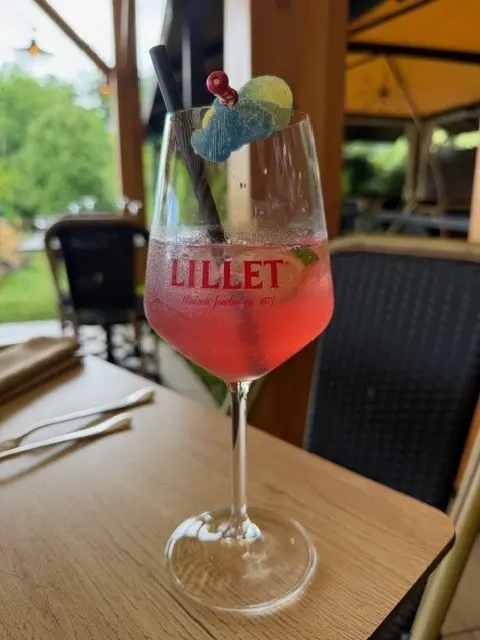
It comes in three versions. Lillet Blanc is the most common, pale gold with notes of honey and citrus. Lillet Rosé is lighter and fruitier, better for summer terraces. Lillet Rouge is richer, with orange peel and warm spice, closer to a light vermouth.
Serve it chilled over ice with a slice of orange or cucumber. That is all it needs.
What makes Lillet distinct among French apéritifs is its base: it is fundamentally a wine product, not a spirit. That makes it lower in alcohol (17% ABV) and more food-friendly than most alternatives. It pairs naturally with charcuterie, light seafood, or a simple plate of olives, which is exactly how you will find it served across the Bordeaux region.
One thing worth knowing: Lillet used to contain a higher dose of quinine, giving it a more pronounced bitter edge. The recipe was adjusted in the 1980s, making the modern version gentler and more approachable. Some aficionados still mourn the original.
🍷 French vocabulary: l'apéritif
- Un apéritif / l'apéro: a pre-dinner drink
- Une quinquina: cinchona bark extract, used to flavour apéritifs
- Macérer: to macerate
- Un glaçon: an ice cube
- Une rondelle: a round slice
- Doux / douce: sweet, gentle
- Floral(e): floral
- Amer / amère: bitter
Pastis: The South's Answer
Travel south from Bordeaux towards Marseille and Lillet disappears from menus. Pastis takes over.
Pastis is an anise-flavoured spirit, typically around 45% ABV, always served diluted with cold water at a ratio of roughly 1:5. The dilution turns the liquid milky white, a visual transformation the French call louche. It is one of those small pleasures that never loses its appeal.
The flavour is assertive: star anise, liquorice, fennel. Either you like it immediately or you spend months learning to. Many people fall somewhere in between.
Pastis is deeply associated with Marseille and Provence. Drinking it in Bordeaux is perfectly normal, but it carries a different regional identity. If Lillet is Bordeaux on a sunny afternoon, Pastis is Marseille at a pétanque court.
Key difference from Lillet: Spirit-based vs wine-based. Much higher alcohol. Bold anise flavour vs gentle fruit and floral. Pastis is not something you sip delicately; it announces itself.
Kir: Burgundy's Classic
Kir is not a drink, strictly speaking. It is a combination: white wine (traditionally Bourgogne Aligoté) with a splash of blackcurrant liqueur (crème de cassis). The proportion is usually about one part cassis to four or five parts wine.
Canon Félix Kir, mayor of Dijon after World War II, popularised it as a way to support local production of both wine and cassis. The name stuck. Kir Royale replaces the still wine with Champagne. Kir Pêche uses peach liqueur. The variations are endless and widely adapted across France.
In Bordeaux, you will find Kir on most café menus, though often made with Bordeaux white rather than Burgundy Aligoté. The taste changes accordingly, but the principle holds.
Key difference from Lillet: Kir requires assembly each time; it is not a bottled product. The flavour is more obviously sweet and fruity. Lillet has more complexity from the cinchona and wine base.
Suze: The Bitter One
Suze is where things get interesting for anyone exploring French drinks culture seriously. It is a gentian-based liqueur, golden yellow, with a pronounced bitter and earthy flavour. Gentian root is harvested from the Alps and Jura mountains. The bitterness is real and uncompromising.
Suze is typically served with tonic water or soda and a slice of lemon. The bitterness softens slightly with dilution, but it never disappears. That is the point.
French people tend to either love Suze or find it medicinal. Among younger drinkers in Paris and Lyon, it has seen a significant revival over the past decade, partly driven by cocktail culture and a broader appreciation for bitter flavours.
Key difference from Lillet: Suze is genuinely bitter where Lillet is gentle and sweet. They occupy opposite ends of the apéritif spectrum. Suze is an acquired taste; Lillet is accessible from the first sip.
Pineau des Charentes: The Neighbouring Cousin
Pineau des Charentes comes from just north of Bordeaux, in the Cognac region. It is made by blending grape juice with Cognac before fermentation, which stops the fermentation and preserves the natural sugars. The result is sweet, rich, and relatively low in alcohol (around 17–22% ABV depending on the style).
It comes in white, rosé, and red versions. The white tends towards honey, dried apricot, and vanilla. The red is denser, with fig and dark fruit notes. Pineau works particularly well with foie gras, melon, or blue cheese.
Key difference from Lillet: Pineau is sweeter and more viscous. Where Lillet is crisp and light, Pineau is richer and more dessert-adjacent. The Cognac base gives it a warmth that Lillet's wine base does not.
Quick Comparison
| Apéritif | Base | ABV | Flavour | Region |
|---|---|---|---|---|
| Lillet Blanc | Wine + fruit liqueur | 17% | Floral, light, slightly sweet | Bordeaux |
| Pastis | Anise spirit | 45% | Bold anise, liquorice | Provence / Marseille |
| Kir | Wine + cassis | ~10–12% | Sweet, fruity | Burgundy |
| Suze | Gentian liqueur | 15% | Bitter, earthy | Jura / Alps |
| Pineau des Charentes | Grape juice + Cognac | 17–22% | Rich, sweet, honeyed | Charentes |
A Note on French Drinking Culture
Understanding these drinks is one thing. Understanding when and how to order them is another.
The apéritif moment in France is social, not transactional. You do not rush it. You do not order food at the same time, at least not a full meal. The idea is to open the appetite, slow down, and transition from the working day into the evening.
In Bordeaux, that culture is particularly relaxed. The city has a rhythm that rewards slowing down. Sitting on a terrace in the Chartrons neighbourhood with a Lillet Blanc and a plate of local charcuterie is not a tourist activity. It is how people actually live here.
If you want to understand that culture from the inside, the language is the key. Much of what makes French social life rewarding is inaccessible without French. Our French courses in Bordeaux are built around exactly that kind of cultural immersion, not just grammar and vocabulary, but the social codes and rituals that make the language come alive.
Which One Should You Try First?
If you are new to French apéritif culture, start with Lillet Blanc. It is approachable, elegant, and genuinely representative of where you are. From there, try a Kir to understand how wine and liqueur interact. Then, if you are feeling adventurous, a Suze with tonic to experience the bitter side of French taste.
Each one will teach you something about the region it comes from and the people who drink it. That is not a bad way to learn French culture.
You might also enjoy our articles on wine from Bordeaux and cultural activities in Bordeaux.
🍷 Please drink responsibly.
Channel Trotters: French in Bordeaux