Sea Shepherd is turning 20.
Twenty years defending the oceans, endangered species, and the fragile equilibria of a marine world that most of us will never truly see. Twenty years driven by a simple conviction: some things are worth fighting for.
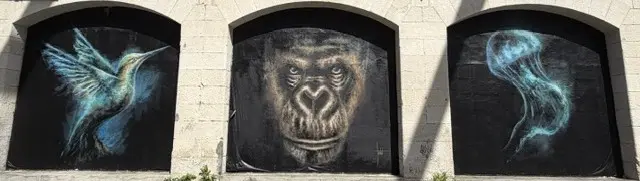
It was at Darwin, during the gathering organised for this anniversary, that everything began. Murals completed over three days on the walls of a warehouse. Artists putting their talent in service of the living world. Conferences, debates, the premiere of an original film about Iberian orcas. And, somewhere between all of it, an idea that slowly took hold:
Paul Watson and the Art of Staying True
Some causes, like some forms of learning, demand far more than passing interest.
To meet Paul Watson is to encounter someone who chose, decades ago, to dedicate his life to something greater than himself. Out of a deep conviction that some things are worth standing for, even when it's uncomfortable, even when the world isn't yet ready to listen.
This faithfulness over time says something essential about what truly matters. It resonates with what we observe in those learning a language: nothing profound is acquired instantly. Understanding takes time. Listening takes attention.
Artists Who Speak Before Words
For three days, Sandrot painted. Before the eyes of visitors, a mural came to life on the walls of Darwin: a powerful animal emerging gradually, brushstroke by brushstroke. Watching a work of art come into being is to understand differently what it means to commit: not a single gesture, but a constant presence, an effort renewed until the vision becomes reality.
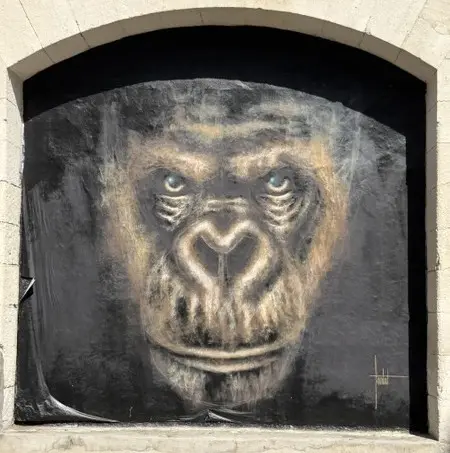
Anagruz, a Lyon-based wildlife painter whose work has been recognised across France and internationally, works along the same border: the one that separates what we see from what we understand. In her paintings, where hyper-realism merges with abstraction, animals are not simply depicted. They look back. They challenge us. They invite us, as she puts it, to "a privileged encounter, without detours."
In front of these works, emotion precedes language. It creates an immediate connection, no translation required.
This idea resonates deeply with what many students experience when they arrive in Bordeaux. Even before they fully understand French, they already perceive something: the energy of a market, the warmth of a shopkeeper, the light on the quayside, the particular silence of a cathedral on a weekday morning.
The city speaks before it is fully deciphered.
The Iberian Orcas: When We Don't Understand, We Fear
One of the most striking moments of the weekend was the premiere of Espartes, an original film produced by Sea Shepherd France, tracing their mission to protect the Iberian orcas.
The story is compelling. Since 2020, these orcas have been interacting with hundreds of sailing boats off the Iberian coast, playing with rudders, circling hulls, sometimes causing damage. Quickly, the press built a narrative: vengeful, aggressive, dangerous animals. Some sailors began retaliating with firecrackers and explosives.
Yet researchers who have been observing them for years tell an entirely different story.
These orcas are not trying to attack. They are playing. Exploring. They may have developed a new behaviour, passed down within the group: a form of collective learning, of curiosity about these strange objects crossing their territory. What was interpreted as a threat was perhaps simply an attempt at contact.
The human reaction reveals something uncomfortable: when faced with what we do not understand, our first instinct is often fear. And fear rarely leads to listening.
Another response emerged instead: to observe, to protect, and to try to understand.
This posture says something essential. Because learning a foreign language is precisely that: accepting not to understand immediately, resisting the discomfort of unfamiliarity, staying open to what the other is trying to say.
Learning French is not just about memorising rules or vocabulary. It is about entering a different way of thinking. Understanding cultural nuances. Discovering that a simple quand même, on verra or c'est pas faux often carries far more than any literal translation can capture.
Like the oceans, every language has its own frequencies. And understanding them always begins with the same gesture: listen before you judge.
Learning French in Bordeaux, Differently
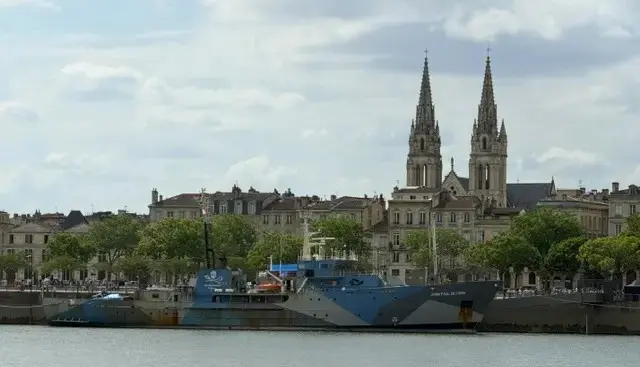
To learn French in Bordeaux is not just to choose a destination. It is to immerse yourself in a living cultural environment.
Its markets, its neighbourhoods, its vineyards, its architecture, its conversations, its rhythms: all of this is also a language. Learning French in Bordeaux is precisely that: not just learning a language in a classroom, but learning to read a world.
A student negotiating their first purchase at the Chartrons market. Another who finally understands a vigneron's humour in Saint-Émilion. A phrase caught in passing at a café, which suddenly makes sense, not because the lesson was revised, but because you were there, present, attentive.
It is in those moments that the language truly takes hold.
Because a language is only truly learned when you begin to love what it reveals, and to respect what it carries.
One Lesson
Whether it is a matter of defending the oceans, painting the living world, or learning a foreign language, one idea runs through it all:
The world is full of forms of intelligence, beauty and communication that we have not yet finished exploring.
What if Bordeaux became your classroom?
Discover our French language courses in Bordeaux: small groups, cultural immersion, Erasmus+ eligible programmes.